Workers often get bogged down while handling drums manually. The risks are far higher considering the bulk liquids and chemicals that are stored and transported in them. While the presence of drum handling equipment makes the job way easier and safer, it is a necessity that facilities call out the risk of manual handling. So let’s look into the dangers of manual drum handling that leads to several workplace injuries.
Why Are Drums Difficult to Handle Manually?
In the attempt to break the drum into motion, workers often end up breaking their back and straining their joints. Given the purpose of industrial drums and the severity of the materials they contain, it’s a question why workers still try to move and store them manually.
Because even a minor slip-up can increase the risk of injury and material loss and in turn lead to costly downtime. Often in a haste to move the drums, workers may bend and end up in an awkward posture.
Risks of Manual Handling
Here are some of the risks related to the manual handling of drums:
- Back and Lower-Back Strain
The weight of the drum combined with awkward posture, distance from the body, and the overall movement makes the handling way more difficult than it already is. While lifting and repositioning something heavy like the drums, posture is crucial, and often workers cannot maintain that. This leaves too much stress on the back and muscles and joints, which may eventually lead to cracks, sprains, and other severe injuries.
- Shoulder and Neck Injuries
Repeated lifting, pushing, tilting, and repositioning of drums often places excessive strain on shoulders and neck, leading to injuries such as dislocation or severe musculoskeletal problems. The more workers compromise on their posture, the more severe the injuries become.
- Hand and Finger Crush Injuries
Turns out back and shoulders aren’t the only parts affected by poor drum handling. How can one rule out the prospect of your fingers getting injured? When hands get stuck between the drums, drums and paller, or at instances where the drum gets slipped from hands during repositioning, hands and fingers are placed at high risk. It can be crushed and severely injured.
- Foot and Leg Injuries
Imagine a drum rolling towards workers; the chances of it striking the feet, ankles, and lower legs are quite high. That’s not all; if a worker loses grip while moving the drum, it can directly land on their foot; sometimes an unstable drum can tip onto the workers; uncontrolled tilting can also cause the same.
- Strains From Repetitive Handling
The repeated physical strain involved in pushing, moving, tilting, and pulling drums throughout the day shouldn’t be taken lightly. While the individual movements may seem manageable, but the strain remains constant. This can lead to muscle fatigue.
Common Manual Handling Practices That Increase Injury Risk
Just because a particular drum-handling practice gets the job doesn’t mean that it’s safe and ergonomic. These are some of the common practices that risk severe injuries:
- Rolling or churning the drums by hand
- Pulling the drum off pallets with excessive force
- Manually tilting the drums
- Moving partially filled drums
- Using improvised methods
What Is the Apt Safety Solution?
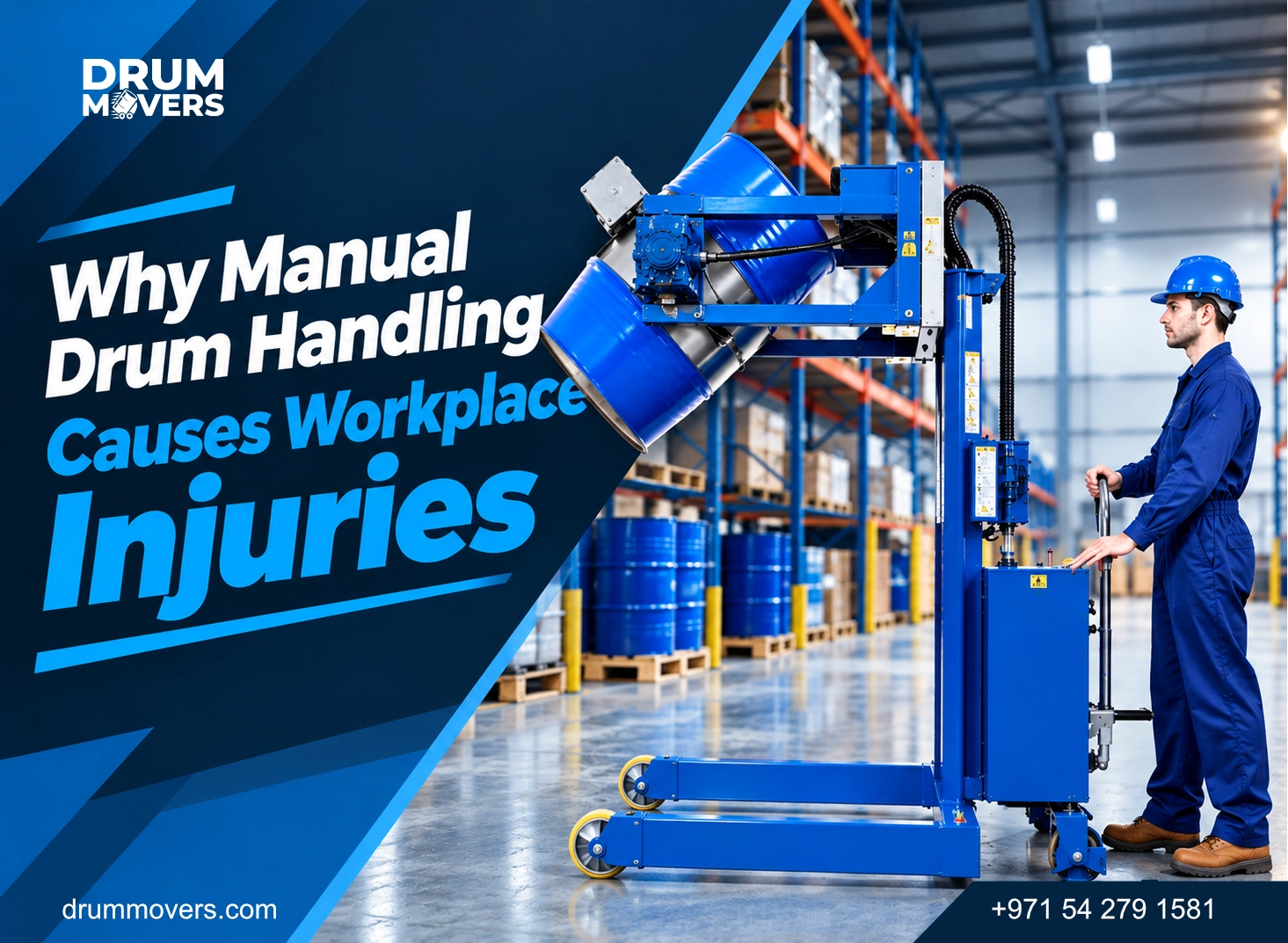
Facilities and industries should ensure the safety of workers by implementing safe drum handling practices. The aim should be to reduce unnecessary manual handling through appropriate measures. What better solution is there than drum handling equipment?
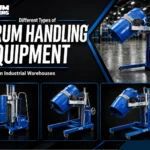
Proper drum handling equipment helps to reduce the risk of injuries and strain, making the process easier and safe. There are several types of drum-handling equipment, such as
- Drum lifters
- Drum trolleys
- Drum rotators
- Electric or powered drum handlers
It is important to choose the right handling equipment based on the drum size, material, required movement, frequency, and the facility layout. Also check whether the drums are filled completely or partially, because this can greatly affect the stability and handling requirements.
Conclusion
Efficient drum handling is crucial to reduce the risk of severe injuries. From the above discussion it is quite clear how dangerous manual handling of drums can be and how the right drum handling equipment makes the task easier and safe.
But from where do you get the best drum-handling equipment? Partnering with a reliable supplier is way more important than you think. This is why Drum Movers is your go-to solution. As the trusted drum handling equipment suppliers of the UAE, we provide high-quality trolleys, lifters, and rotators that helps your workers to carry and transport drums easily. Contact our team and get a quote today.