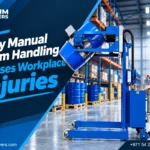
For instance, it can be quite difficult to manually lift, tilt, or position drums. Not to mention the risk involved—back injuries, damaged drums, spills, and costly downtime.
Standard drums weigh around 55 gallons and can become even heavier when full. This is where drum handling equipment becomes relevant. It makes these tasks safer, easier, and efficient. How exactly do they do that? Let’s find out.
Why Is Drum Handling Important?
Proper drum handling helps both workers and businesses alike:
Better Safety
Moving drums manually can risk back injuries, shoulder strain, and several other issues. With drum handlers, operators can easily move the drums to the desired location safely without making any physical effort.
Faster Operations
Well, it’s quite obvious that moving a drum with just manual power will take a lot of time. Drum handlers such as drum movers, trolleys, and stackers, on the other hand, speed up the whole process, making everyday warehouse tasks much easier and efficient.
Reduced Spillage and Waste
The risk of poorly handled drums can involve spills and resultant product wastage. Drum handlers protect both drum and its contents, ensuring safe storage and transport.
Common Drum Handling Challenges
Drum handling challenges comes in many forms and they can be especially difficult when:
- Drums are heavy: Imagine handling a full steel drum, which can weigh around 200kg, whose weight can further increase depending on the content.
- Hazardous content: Transporting chemicals are dangerous enough along with the risk of leaks, which can be dangerous for both workers and the environment alike.
- Repeated manual handling: Repeated lifting, moving, pushing and pulling of drums can lead to fatigue and strain.
- Storage space limitation: Improper drum storage can take up warehouse space.
This is why businesses choose drum handling equipment to tackle these challenges.
Important Drum Handling Equipments
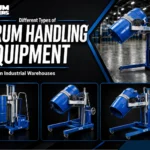
- Drum Movers
Drum movers help operators to safely transport drums around the warehouses and facilities with less physical strain. It supports single operator use and is suited for regular transport.
2. Drum Trolleys
Drum trolleys are well suited for short-distance transport. They come in compact design making them a useful option in small warehouses and busy work areas.
3. Drum Lifters
Operators can raise the drums and place them onto pallets, racks or any other such elevated surfaces. They are useful for works that require the frequent lifting of drums.
4. Drum Rotators and Dispensers
Not all tasks are just lifting and moving, there might be instances where drums need to be tilted or rotated for controlled dispensing. With drum rotators and dispensers pouring and transferring of liquids becomes easier and spill free.
How to Handle Industrial Drums Safely
Now we know what drum handlers are, their types and why they are important. As a next step let’s look into the steps that make drum handling safer.
Before handling:
- Inspect the drum and make sure it’s damage free.
- Check the product label and confirm the drum’s weight.
- Make sure that the drum has enough capacity to hold the particular content.
During Transport:
- Use suitable drum handling equipment.
- Secure the drums properly and make sure the pathways are clear.
- Move drum handlers slowly and avoid sudden movements.
During Storage
- Store the drum on a stable and level surface.
- Always follow the recommended stacking limits.
- Keep the drum away from high heat and other sources of ignition.
- Follow the safety protocols while storing hazardous materials.
During Dispensing
- Use suitable pouring equipment to avoid spills.
- Make sure the operators are wearing PPE kits.
- Be ready with appropriate spill-control measures just in case.
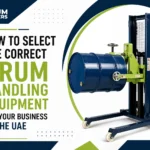
How to Choose the Right Drum Handling Equipment
Choosing the right equipment depends on operation requirements. Therefore, make sure to consider the following:
- Drum type: Drum type matters because steel, plastic or fiber drums may need different handling methods.
- Weight capacity: Choose drum handlers that can handle the required drum weight.
- Warehouse layout: Aisle width, floor conditions, racks and available space of the warehouse should be considered.
- Frequency of use: How often the handler is required is yet another factor. For high-volume operations make use of powered or other specialized drum handlers.
- Industry requirements: Different industries such as oil and gas, food, and chemical may have specific handling requirements. Make sure to refer to that.
Drum Handling Applications
Drum handling equipment is used across diverse industries such as:
- Oil and gas facilities
- Chemical plants
- Food and beverage facilities
- Logistics and warehouses
- Water treatment plants
Conclusion
For UAE warehouses and industrial facilities that handle different types of drums on a daily basis, investing in efficient drum handling equipment in uae is more than convenience–it is a tactful investment that makes routine tasks easier and safer.
Equipment such as drum movers, trolleys, stackers, lifters, and rotators helps to reduce manual effort and prevent the risk of injuries and product wastage.
If you are looking for the best drum handling equipment to safely carry out your lifting and moving operations, then Drum Movers are here to help you choose the right one. Explore our extensive range and make a quote today.